
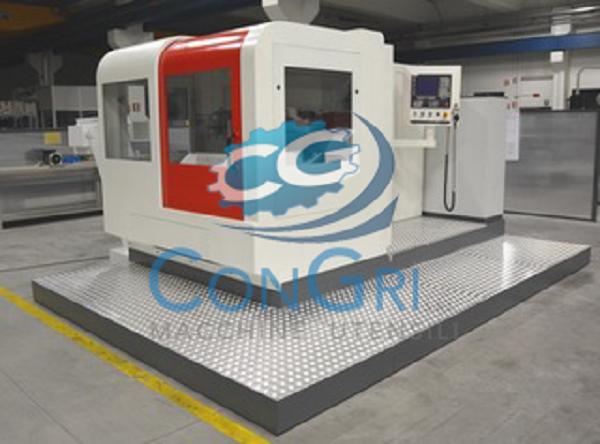
EDM deep drilling: when the choice impacts precision and productivity
EDM deep drilling is a highly effective solution when producing high-precision holes in difficult-to-machine materials or complex geometries. Unlike conventional gun drilling, which relies on a mechanical cutting action, EDM operates through controlled electrical discharges, allowing material removal without direct contact between tool and workpiece. This eliminates cutting forces and improves dimensional control, especially in demanding applications.
When tight tolerances and hardened materials are involved, selecting the appropriate process becomes a key factor in achieving consistent quality and efficient production. EDM deep drilling enables greater process stability and reduces the risk of deformation, making it particularly suitable for precision-driven industries.
ConGri S.r.l., specialized in the supply of new and refurbished machine tools, supports you in identifying the most suitable solution for your specific production requirements. With a solid understanding of machining technologies, you can make informed decisions on when EDM deep drilling represents the most effective choice and how to select a machine that ensures reliable, long-term performance.
EDM deep drilling vs. gun drilling: operational differences and application fields
EDM deep drilling and gun drilling are based on fundamentally different machining principles, which directly influence their performance and application range. EDM deep drilling removes material through electrical discharges, while gun drilling relies on a rotating cutting tool that mechanically removes chips.
EDM deep drilling is particularly suited for hardened steels, superalloys, and components with complex geometries, as it eliminates cutting forces and minimizes distortion. In contrast, gun drilling is typically more efficient in high-volume production on standard materials, where speed and productivity are the main priorities.
When selecting between these two technologies, you should evaluate:
- material type and hardness;
- required tolerances and dimensional accuracy;
- hole depth-to-diameter ratio;
- surface finish requirements;
- production volumes and cycle time constraints.
If your priority is maximum precision on challenging materials, EDM deep drilling provides a higher level of control. If productivity on machinable materials is the main objective, gun drilling remains a more efficient option.
EDM deep drilling and advantages in difficult materials and complex geometries
EDM deep drilling offers clear advantages when machining materials that are difficult to process using conventional methods. Hardened steels, carbides, and high-strength alloys often generate high cutting forces and tool wear in traditional drilling operations. EDM eliminates these issues by removing material through thermal erosion rather than mechanical cutting.
This process is particularly effective for producing deep, small-diameter holes while maintaining tight tolerances and consistent surface quality. Since tool rigidity is not a limiting factor in the same way as in conventional machining, EDM deep drilling allows greater flexibility in complex geometries.
Process stability is another key benefit. With proper control of discharge parameters and dielectric fluid management, you can achieve consistent results across complex production batches. In addition, the ability to machine heat-treated components reduces the need for secondary operations, improving overall efficiency and minimizing scrap rates.
EDM deep drilling: how to effectively evaluate a used machine
When assessing a used EDM deep drilling machine, it is essential to go beyond the initial purchase price and focus on its technical condition and long-term reliability. EDM processes require high levels of precision and process stability, so even minor deviations can impact surface quality and repeatability.
The EDM generator is the most critical component to evaluate, as it directly controls discharge performance and machining consistency. A modern, well-maintained generator ensures stable operation and predictable results. You should also verify the condition of the machine axes and linear guides, as wear or backlash can negatively affect positioning accuracy.
For a comprehensive evaluation, consider:
- generator condition and discharge stability;
- axis accuracy and repeatability;
- dielectric filtration system efficiency;
- evidence of professional refurbishment or overhaul;
- maintenance records and previous operating conditions.
A machine that has been properly refurbished and certified by a reliable supplier significantly reduces operational risk and ensures consistent performance over time.
EDM deep drilling and machine selection with the support of ConGri S.r.l.
Selecting the right EDM deep drilling solution requires a comprehensive evaluation of both machine specifications and production requirements. Generator power, structural rigidity, axis precision, and dielectric management must all be aligned with the materials being processed and the expected performance levels.
ConGri S.r.l. supports you throughout this process with a technical approach tailored to your specific application. By leveraging experience in both new and refurbished machine tools, you can compare different EDM deep drilling solutions based on performance, reliability, and operating costs.
This approach allows you to identify the most suitable machine for your production volumes, material types, and precision requirements. A well-matched solution ensures seamless integration into your workflow, reducing inefficiencies and improving overall output quality.
With the right technical support, EDM deep drilling becomes not just a machining process, but a strategic investment aimed at achieving consistent, repeatable, and high-quality results.
Click here to contact us and learn more!
Frequently asked questions about EDM deep drilling
When should EDM deep drilling be preferred over gun drilling?
EDM deep drilling is recommended for hard or hardened materials, tight tolerances, and complex geometries, where mechanical drilling may cause deformation or loss of accuracy.
Which materials are best suited for EDM deep drilling?
Hardened steels, superalloys, carbides, and heat-treated components are particularly suitable for EDM deep drilling due to its non-contact process.
What are the main advantages of EDM deep drilling?
Key advantages include high precision, absence of cutting forces, the ability to machine difficult materials, and consistent results in deep, small-diameter holes.
How should a used EDM deep drilling machine be evaluated?
Evaluation should focus on generator condition, axis precision, dielectric system performance, and maintenance history to ensure long-term reliability.
What factors influence precision in EDM deep drilling?
Machine stability, generator performance, discharge parameters, dielectric management, and correct process setup all contribute to achieving consistent and accurate results.